
KDDI R&D Laboratories and I Bee, K.K. have upgraded their Bluetooth-enabled bipedal walking robot, named Pirkus-R Type-01, with facial recognition capabilities. Equipped with a built-in CCD camera, the 29-cm (1-foot) tall personal (build-it-yourself) robot can spot faces that it would like to inspect at closer range. Pirkus-R is able to self-correct its direction as it makes its approach, and once it captures a facial image, it can determine whether or not the person is registered in its file.

I Bee was responsible for developing the robot, which can be controlled from an au Bluetooth-enabled handset (W21T/W31T/W41T) using a BREW application. As I Bee continues to develop Pirkus-R?s control and facial recognition technology and the 8-bit CPU that links the robot with the handset, the price (250,000 yen for the deluxe model) may start to come down.
The robot?s facial recognition technology is based on technology that KDDI developed for mobile phones. KDDI has improved upon previous facial recognition technology, which used to require you to position your face directly in front of the camera in order to be recognized. Other problems with the human-robot interaction have been addressed, including lighting-related problems that occurred when capturing images. Pirkus-R is able to automatically detect which direction you are facing, and is no longer at the mercy of variations in lighting conditions. Furthermore, because it is equipped with Bluetooth technology, you can use your BREW-enabled au handset to check Pirkus-R?s operating status and facial recognition results. Of course, you can control it from your phone, too.
Pirkus-R Type-01 is scheduled to appear at the Robo-One fights being held this weekend (March 17 to 19) at Panasonic Center Tokyo.
UPDATE 31/Mar/2006: Tempusmaster at www.robots-dreams.com has posted video of Pirkus-R in action (sort of) at Robo-One. The video suggests a need for further improvements to Pirkus-R's facial recognition capabilities. (Link)
[Sources: IT Media, Robot Labs]

 More details about
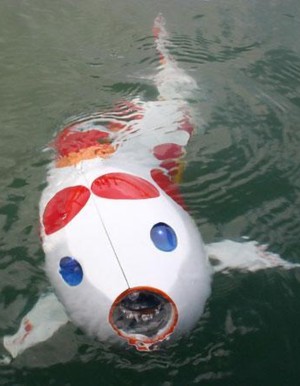
 Robo-Fisher, a submersible robot designed to clean the floors of giant aquariums, is being developed by Osaka City University and eight private companies. Underwater operations were tested last week at a diver training pool in Osaka.
 Final preparations are being made for the April 1 launch of Tosa Space Sake, a Japanese rice wine made with a batch of yeast that spent 10 days in space last October aboard a Russian Soyuz rocket. At a March 6 press conference held in Kochi city, the labels for the space sake, which will hit shelves across Japan next month, were displayed to the public.
 An unmanned aircraft powered by a ground-based laser was demonstrated at Osaka Dome on March 7. The aircraft is the work of a Kinki University research team led by Professor Nobuki Kawashima (aeronautical engineering). The researchers expect the aircraft to be used for gathering information in the event of a disaster.