Computopia: Old visions of a high-tech future

In 1969, Shōnen Sunday magazine featured a series of illustrated articles entitled “Computopia,” which depicted life in a pleasant future pervaded by computers. Here are three illustrations from the series (1, 2, 3).

* * * * *

- Future Classroom

Computopia, old visions of a computerized future --

“The Rise of the Computerized School,” illustrated by Shigeru Komatsuzaki, takes a peek inside the classroom of the future, where the teacher is an image on a screen and students sit at desks equipped with computers. When the teacher presents a problem, the students input the answer into their computers. If an answer is incorrect, the students use a light pen to make revisions on the monitor until the computer says it is right.

Computopia, old visions of a computerized future --

For the purpose of maintaining order, the future classroom will come equipped with watchful robots that rap students on the head if they lose focus or act up. [View full image]

* * * * *

- Future Home

This illustration by Toshio Okazaki, entitled “Computer Life in 20 Years,” depicts what the typical household might look like 20 years in the future — in 1989 — after computers have become an integral part of daily life.

Computopia, old visions of a computerized future --

In this high-tech home, dad chats on the videophone while the wall-mounted home computer spits out a newspaper and the automatic air conditioner cools the room.

Computopia, old visions of a computerized future --

Junior’s eyes are glued to the 3D TV while an autonomous vacuum robot cleans the floor nearby. A hovercraft floats in the sky outside the window.

Computopia, old visions of a computerized future --

Mom performs calculations on a miniature home computer.

Computopia, old visions of a computerized future --

The home is also furnished with nifty devices such as an automatic iron, an autonomous wheeled table that keeps food warm, and a kitchen robot that sets the table and takes care of the dishes. [View full image]

* * * * *

- Future Hospital

“The Amazing Unmanned Operating Room,” illustrated by Teruya Yamamoto, takes a peek inside the computerized hospital of the future.

Computopia, old visions of a computerized future --

In this unmanned operating room, a computer-controlled robot arm is performing a heart transplant with cool precision. The patient’s heart has been removed and placed on the adjacent table. Before inserting the new artificial heart, the computer waits for instructions from the human doctor, who is monitoring the procedure on a screen in the next room. [View full image]

[Via: 昭和の雑誌広告・懐かしモノ]

Video: Sick robot exhibits symptoms of H1N1

A robotic patient on display at the Security & Safety Trade Expo (RISCON) in Tokyo exhibits symptoms of the H1N1 flu virus.


+ Video

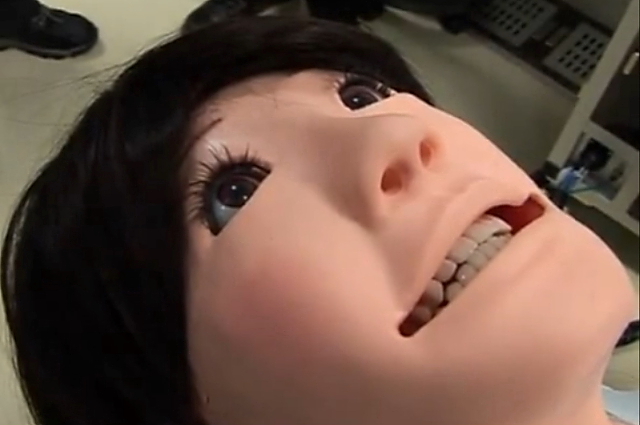
According to this NTV news report, the life-sized humanoid robot was developed as a realistic training aid for medical workers. In addition to sporting a suit of human-like skin, the robot sweats, convulses, moans, cries tears, and exhibits symptoms not unlike a real human patient infected with the H1N1 virus. If the robot does not receive the proper treatment, the symptoms gradually worsen until it stops breathing.

Patient simulator with H1N1 symptoms --

The news report fails to mention who created the robot, but it looks like it might be a distant cousin of the emergency care simulator developed by IMI.

‘Taizo’ robot leads exercises for the elderly

On Thursday — shortly before the Japanese government released new statistics showing the nation’s centenarian population has reached an all-time high of more than 40,000 — researchers from the National Institute of Advanced Industrial Science and Technology (AIST) unveiled a new humanoid robot designed to lead the elderly in physical exercises.

Taizou exercise instructor robot --
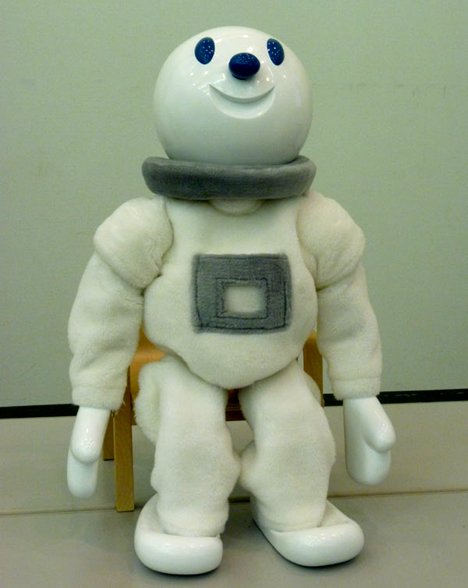
Taizo (built by AIST, General Robotix and Ibaraki Prefectural Health Plaza)

Dressed in a velvety space suit and sporting a goofy grin, the 70-centimeter (28-in) tall robot, named “Taizo” (a play on the word “taisou,” which means “calisthenics”), has a friendly appearance designed to motivate elderly people to engage in more physical exercise.


+ Video

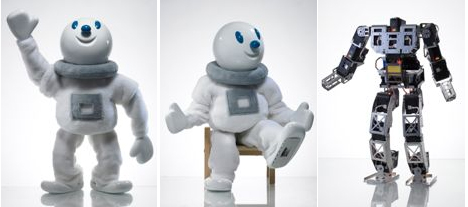
With 26 joints in its body, the 7-kilogram (15-lb) mechanical exercise instructor can smoothly demonstrate around 30 different moves for others to imitate. Although Taizo does most of its exercises while sitting in a special chair, it can also stand up to perform some activities.

Taizou exercise instructor robot --

Taizo can operate for about two hours on a single charge, and it has very basic language skills — enough to understand simple spoken commands and lead a group in exercise.

The developers plan to start selling (and renting) the robots next year for around 800,000 yen (approx. $8,000) each.

[Sources: Sankei, Robot Watch, AIST]

Photos: Good Design 2009

Good Design Expo 2009, Tokyo --

The annual Good Design Expo — billed as one of the biggest design events in Asia — showcases thousands of well-designed products under consideration for the year’s Good Design Awards. Over 2,000 items ranging consumer electronics, automobiles and furniture to office equipment, building designs and sporting goods were exhibited at this year’s event, which was held at Tokyo Big Sight this weekend (Aug 28-30). Here are just a few of the many eye-catching designs on display.

Good Design Expo 2009, Tokyo --
Freshness label [+]

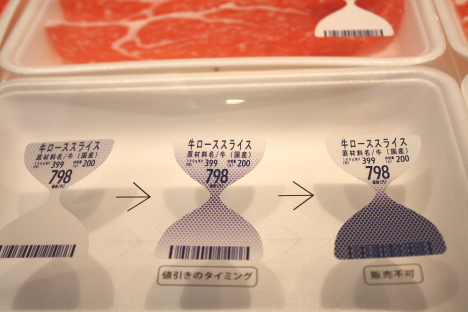
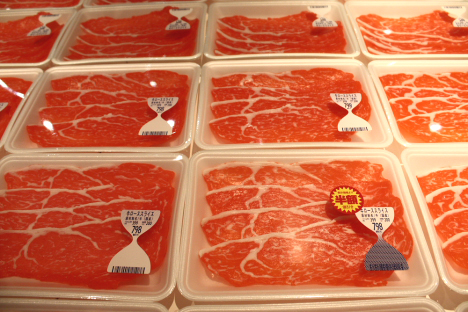
One the most interesting items was this hourglass-shaped freshness label for meat products (designed by TO-GENKYO). The label contains special ink that changes color based on the amount of ammonia emitted by the meat (the older the meat, the more ammonia it releases).

Good Design Expo 2009, Tokyo --
Freshness label [+]

Like an hourglass, the bottom half of the label “fills up” as the meat ages. Consumers can judge the product’s freshness at a glance.

Good Design Expo 2009, Tokyo --
Freshness label (with 1/2 price tag) [+]

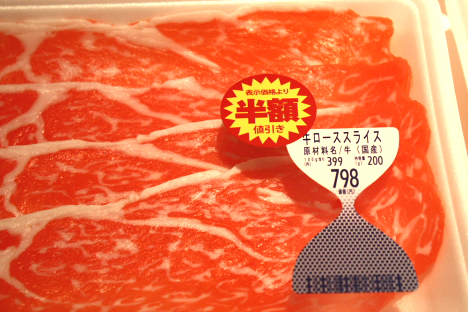
When the meat is no longer suitable for sale, the ink blocks the barcode at the bottom so that it cannot be scanned at the cash register.

Good Design Expo 2009, Tokyo --
Hana-Akari [+]

These stylish Hana-Akari interior lamp shades by Sony are actually dye-sensitized solar cells that mimic photosynthesis by storing energy in a thin membrane. The shades collect sunlight during the day and power the lamp at night.

Good Design Expo 2009, Tokyo --
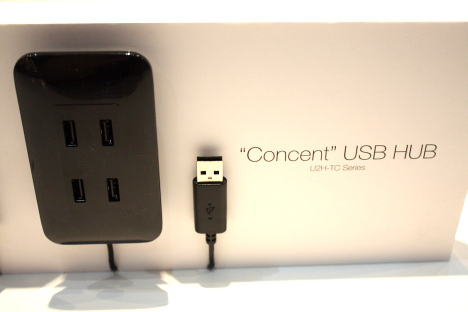
“Concent” USB hub that looks like wall outlet (by ELECOM) [+]

Good Design Expo 2009, Tokyo --
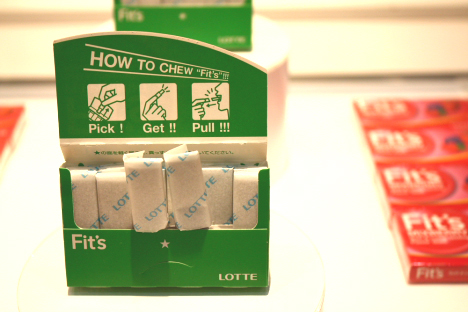
Lotte “Fit’s” gum package [+]

Good Design Expo 2009, Tokyo --
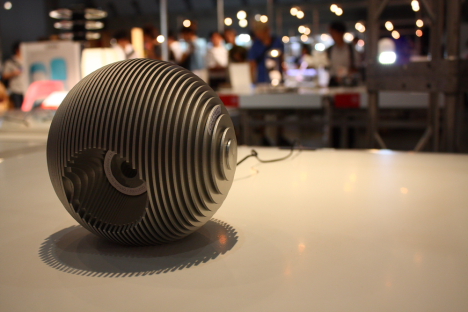
LED desk lamp [+]

Good Design Expo 2009, Tokyo --
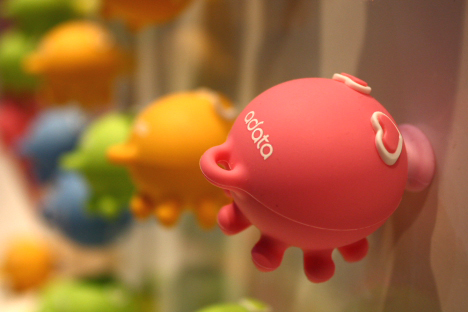
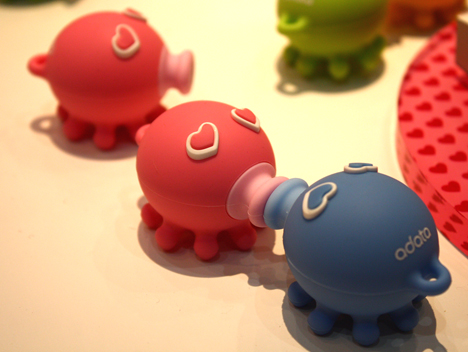
Kissing Octopus Couple USB flash drives [+]

The magnetized mouths of these Kissing Octopus Couple USB flash drives (by A-Data) allow them to function as magnetic stickers when not plugged into a computer. The USB connector tucks neatly inside the body.

Good Design Expo 2009, Tokyo --
Kissing Octopus Couple USB flash drives [+]

When two are placed face to face, they lock together in a magnetic kiss (making them an ideal gift for Valentine’s Day).

Good Design Expo 2009, Tokyo --
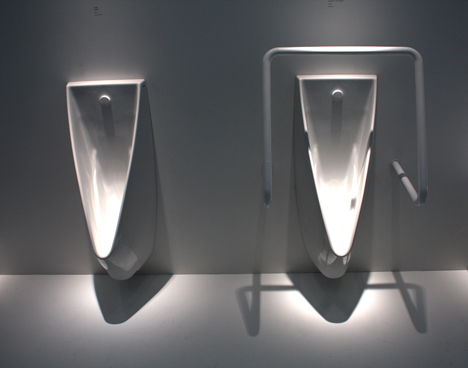
Restroom Item 01 urinals by Toto [+]

Good Design Expo 2009, Tokyo --
Balsa Max fishing lure [+]

The eye-catching Balsa Max fishing lures by Megabass are built using cutting-edge technology and natural materials.

Good Design Expo 2009, Tokyo --
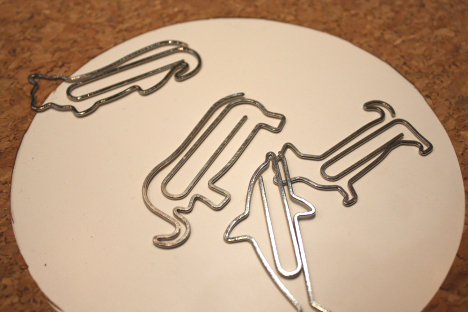
D-Clips (animal-shaped paperclips by Designphil) [+]

Good Design Expo 2009, Tokyo --
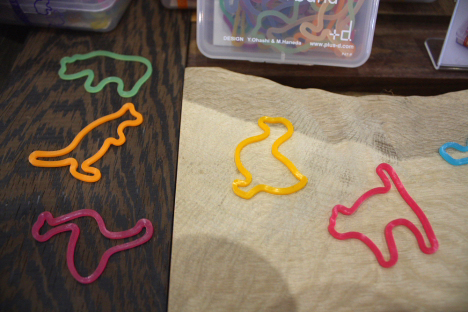
Animal rubber bands (by +d.) [+]

Good Design Expo 2009, Tokyo -- Good Design Expo 2009, Tokyo --
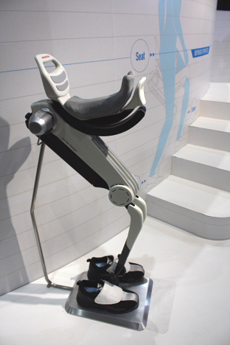
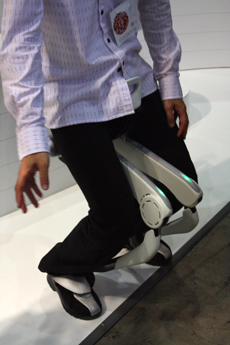
Honda Walking Assist Device [+] [+]

Honda’s experimental Walking Assist Device helps support the wearer’s body weight, reducing the load on the legs while walking, going up and down stairs, and crouching.

Good Design Expo 2009, Tokyo --
“Palook” spiral fluorescent bulbs by Panasonic [+]

Good Design Expo 2009, Tokyo --
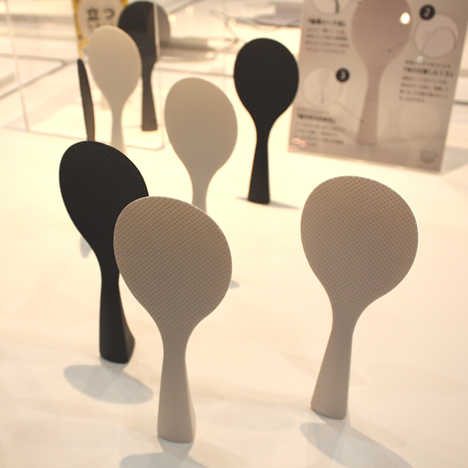
Rice spoons that stand on end [+]

Good Design Expo 2009, Tokyo --
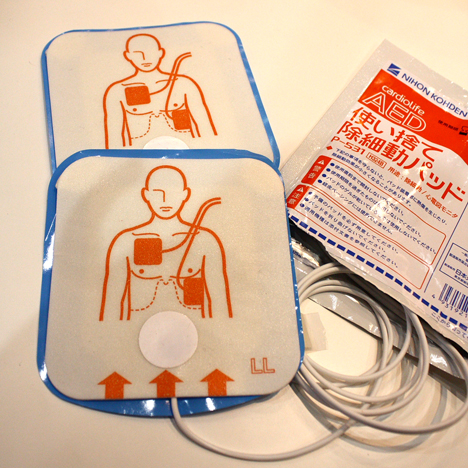
Disposable AED pads [+]

These disposable pads are designed for use with automated external defibrillators (AEDs) placed in public areas. The imprinted design shows where to attach the pads to the body — helpful information for the first-time user.

Good Design Expo 2009, Tokyo --
Candy-colored portable hard drives (by A-Data) [+]

Good Design Expo 2009, Tokyo --
QLD-101 table lamp [+]

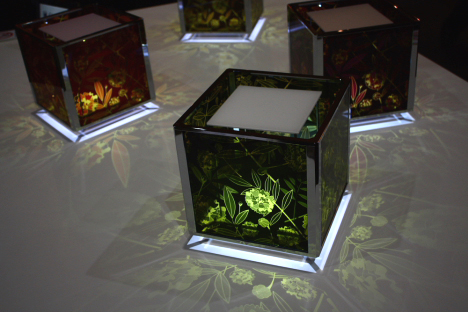
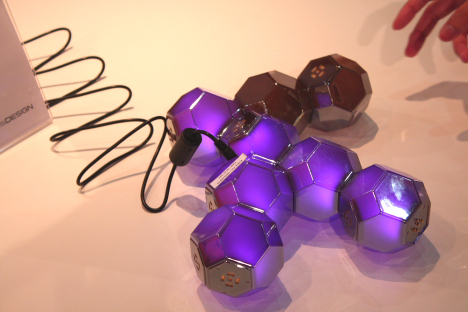
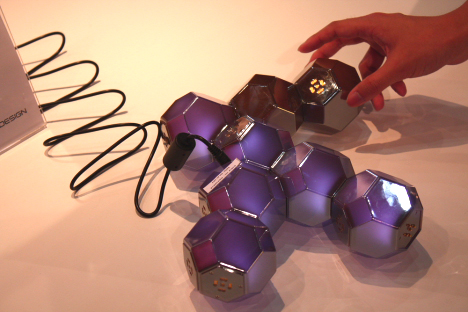
The QLD-101 table lamp (designed by Qisda Corporation) is a modular LED light fixture composed of crystal-like units that connect together with magnets. The polyhedral units can be easily configured into a variety of shapes, and the low-temperature LEDs prevent them from becoming hot to the touch.

Good Design Expo 2009, Tokyo --
QLD-101 table lamp [+]

The interactive lamp, whose design was inspired by natural crystals, gently cycles through a spectrum of colors.

RIBA robot nurse bear

Meet RIBA, a robot nurse that resembles a friendly bear.

RIBA, Robot for Interactive Body Assistance --

RIBA — short for “Robot for Interactive Body Assistance” — was developed by researchers at Japan’s Institute of Physical and Chemical Research (RIKEN) and Tokai Rubber Industries, Ltd. (TRI). Designed primarily to assist nurses by lifting patients in and out of their beds and wheelchairs (as well as on and off the toilet), the 180-kilogram (400-lb) robot can safely pick up and carry people weighing as much as 61 kilograms (135 lbs).


+ Video

The cheery-looking machine has long, multi-jointed arms embedded with an array of tactile sensors that help it optimize the lifting and carrying of humans. For safety purposes, RIBA’s entire body is covered in a soft skin molded from an advanced lightweight urethane foam developed by TRI. The soft skin is designed to ensure the comfort of patients while they are being carried. In addition, the arm joints yield slightly under pressure — much like human arms do — further increasing the level of comfort and safety.

The robotic bear can also recognize faces and voices, as well as respond to spoken commands. Using visual and audio data from its surroundings, RIBA can identify co-workers, determine the position of those nearby, and respond flexibly to changes in the immediate environment. The motors operate silently, and a set of omni-directional wheels allow the robot to navigate tight spaces inside hospitals and nursing facilities.

RIBA, Robot for Interactive Body Assistance --

Japan, which faces an impending shortage of nurses as the population grows older, is looking at ways to offset the inevitable challenges that medical institutions will encounter in the coming years. Technology is regarded by some as the solution to this problem, and a considerable amount of government and private research is being devoted to developing robots capable of working in the healthcare field.

RIBA is an upgraded version of RIKEN’s RI-MAN, a robot nurse assistant developed in 2006 that was only able to lift dolls weighing 18.5 kilograms (40 lbs). In addition to better strength and perception, RIBA’s improved information processing technology allows it to crunch data at least 15 times faster than RI-MAN. This allows RIBA to move faster and with more confidence than its predecessor.

RIBA, Robot for Interactive Body Assistance --

RIBA’s creators say they chose the friendly teddy bear appearance to put patients at ease. Attempting to make the robot look human would only frighten people, they claimed in their press release.

RIKEN and TRI plan to put RIBA to work in hospitals within the next five years.

[Source: RIKEN (JP) // Added Sep 1: English press release]

Bioengineered mouse tooth

Japanese researchers have grown the first-ever fully functional bioengineered tooth inside the mouth of a mouse.

Bioengineered tooth germ grows into mouse tooth --
Grow new teeth – Mouse shows off bioengineered molar (glowing green)

The bioengineered tooth, which was grown in place of a lost molar, has the same properties of the old tooth and is strong enough to allow the mouse to chew food normally.

To create the new tooth, the researchers — led by Tokyo University of Science professor Takashi Tsuji — took epithelial cells and mesenchymal cells (about 50,000 each) from a mouse embryo and cultivated them together in a collagen-based medium to create a tiny tooth bud — a mass of tissue that has the potential to develop into a tooth.

They then implanted the 0.5-mm tooth bud into the jawbone of an adult mouse in place of a lost tooth. After 37 days, a new tooth sprouted, and after 50 days, it had grown to the same height as the adjacent teeth. The bioengineered tooth has the same hardness as ordinary teeth and it contains blood vessels and nerves, making it sensitive to external stimuli and pain, according to the researchers.

This research is expected to advance the development of “tooth regenerative therapy,” which may one day allow doctors to replace diseased or damaged teeth with bioengineered teeth grown from stem cells such as induced pluripotent stem (iPS) cells. This type of treatment could ultimately eliminate the need for dentures and false teeth.

[Source: Yomiuri, PNAS]

Gov’t to track citizens, prevent pandemic

H1N1 --

Can GPS tracking technology prevent a swine flu pandemic? Japan’s Ministry of Internal Affairs and Communications hopes to find out this autumn by testing a mobile phone-based GPS tracking system that constantly monitors each individual’s location and sends text alerts to participants if they cross paths with anyone who is later identified as a flu victim.

The proposed system relies on mobile phone providers to constantly track the subjects’ geographical locations and keep chronological records of their movements in a database. When a person is labeled as “infected,” all the past location data in the database is analyzed to determine whether or not anyone came within close proximity to the infected individual.

The system will know, for example, whether or not you once boarded the same train or sat in the same movie theater as the infected individual, and it will send you a text message containing the details of the close encounter. The text messages will also provide instructions on specific measures to take in response.

The primary purpose of the test, which will involve about 2,000 volunteers in both urban and rural areas, is to verify the precision of GPS tracking technology, estimate the potential costs of operating such a system, and determine whether or not such a system can be put into practical use.

To be of any real use in a place like Tokyo, a phone-based disease-tracking system would require the participation of hundreds of thousands, if not millions, of subscribers willing to have their locations tracked — not a stretch given the popularity of wireless services such as NTT DoCoMo’s “iConcier,” which provides personalized, concierge-like services to individual mobile phones based on location data, shopping history, and other personal information.

From a privacy standpoint, opinions differ on the degree to which sensitive personal data such as location and travel history should be shared and used. With this in mind, the ministry will also explore the issue of psychological resistance to the use of personal information.

[Source: Asahi]

19th-century pregnant dolls

Edo-period obstetric training doll, Japan --
19th-century obstetric training doll – Wada Museum [+]

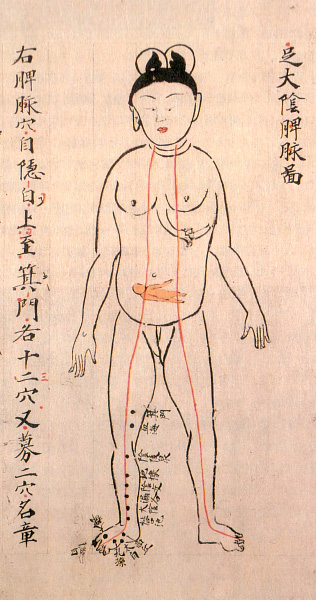
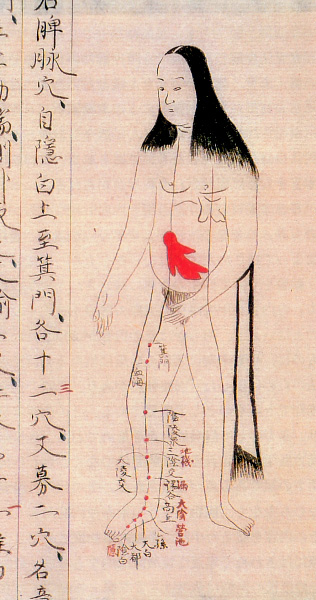
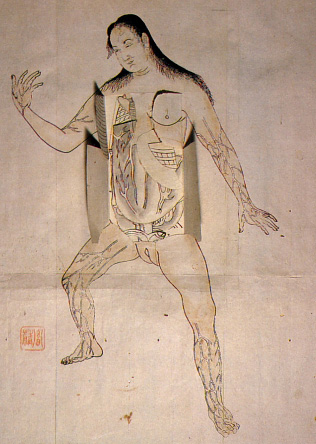
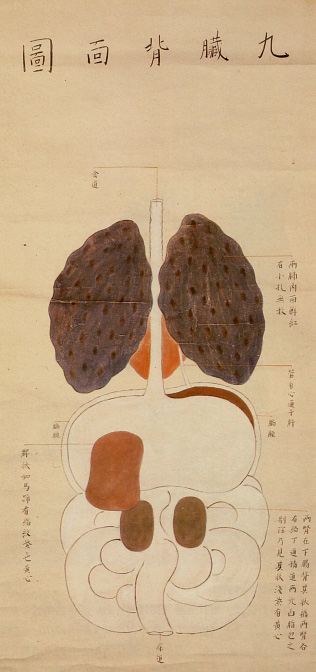
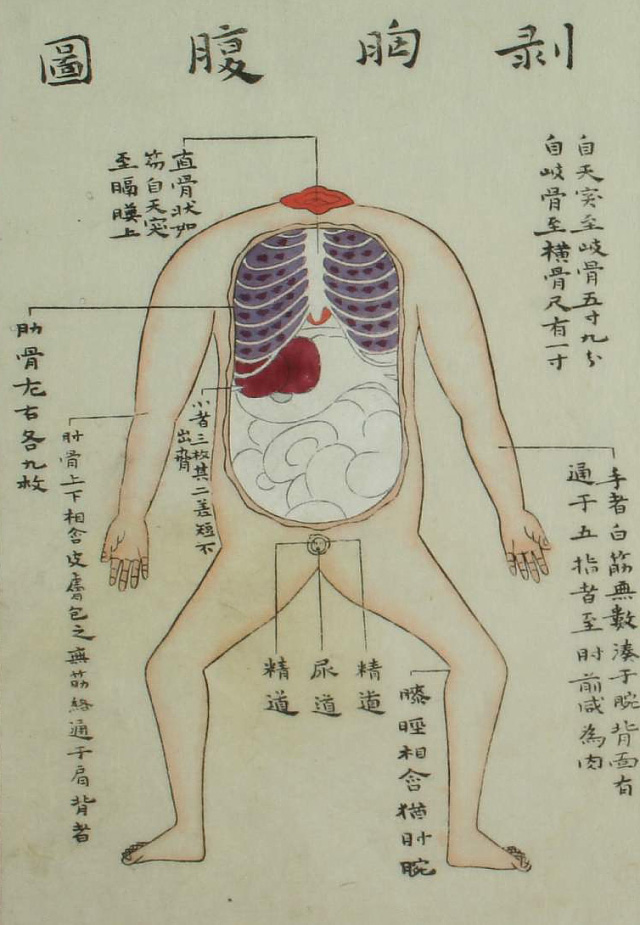
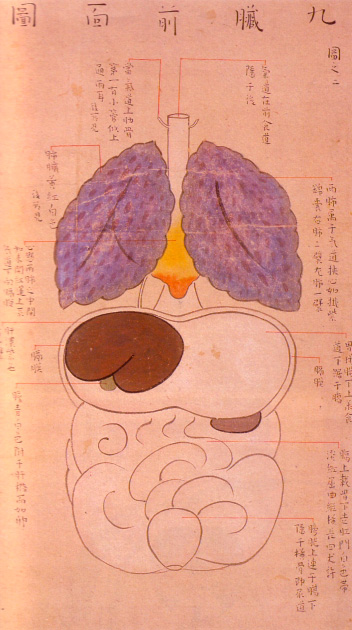
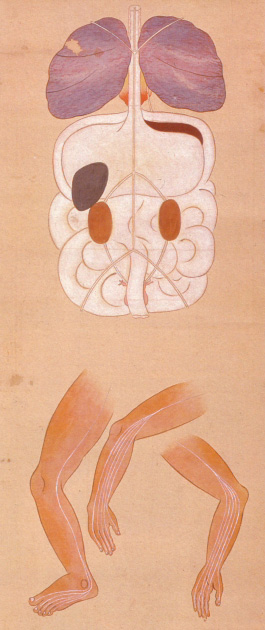
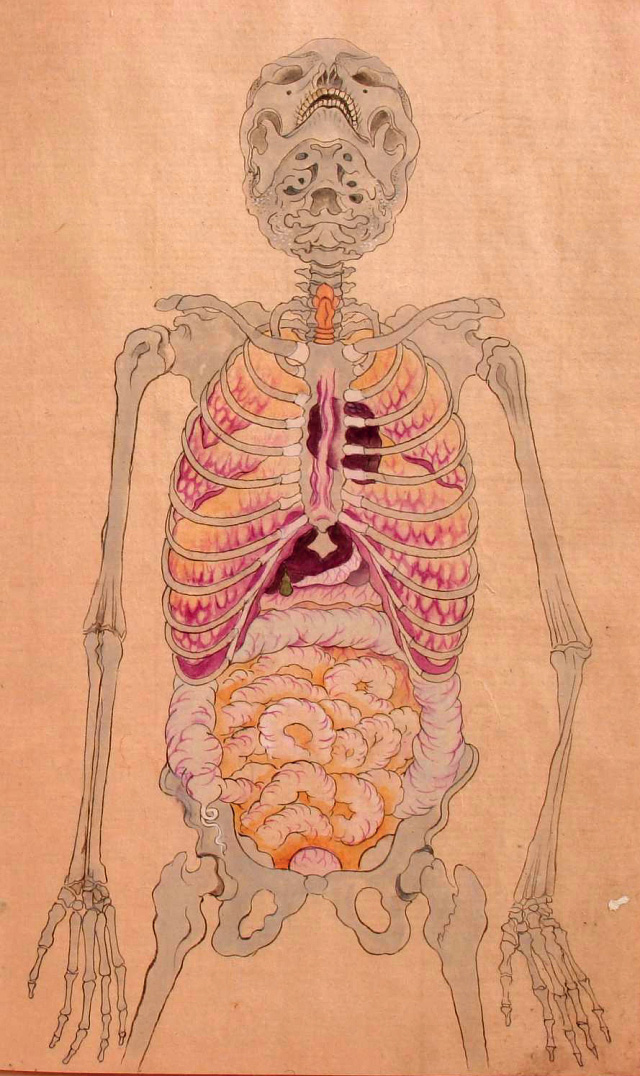
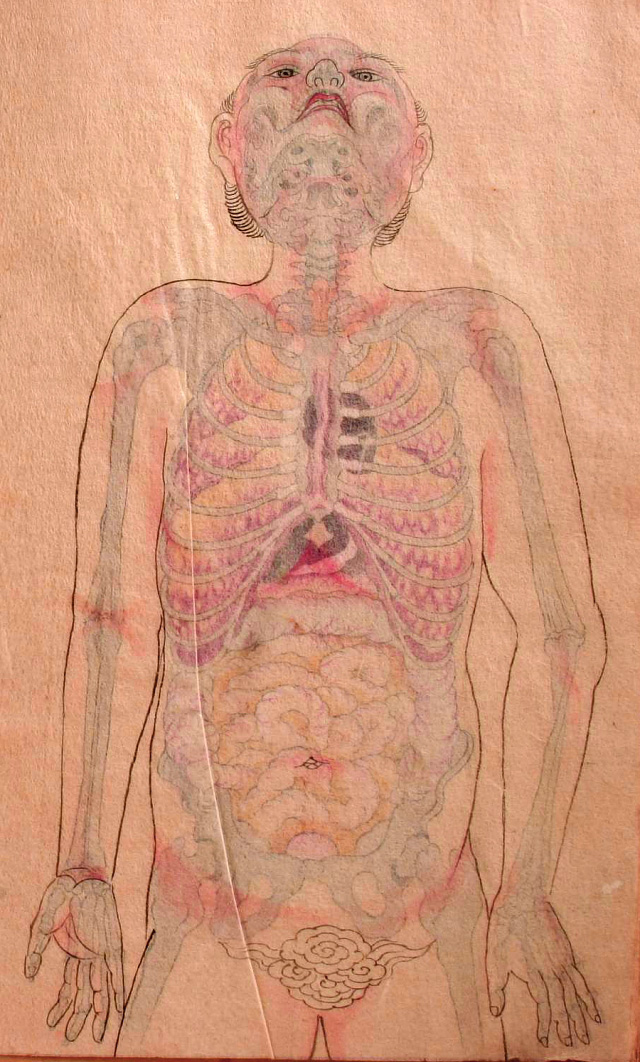
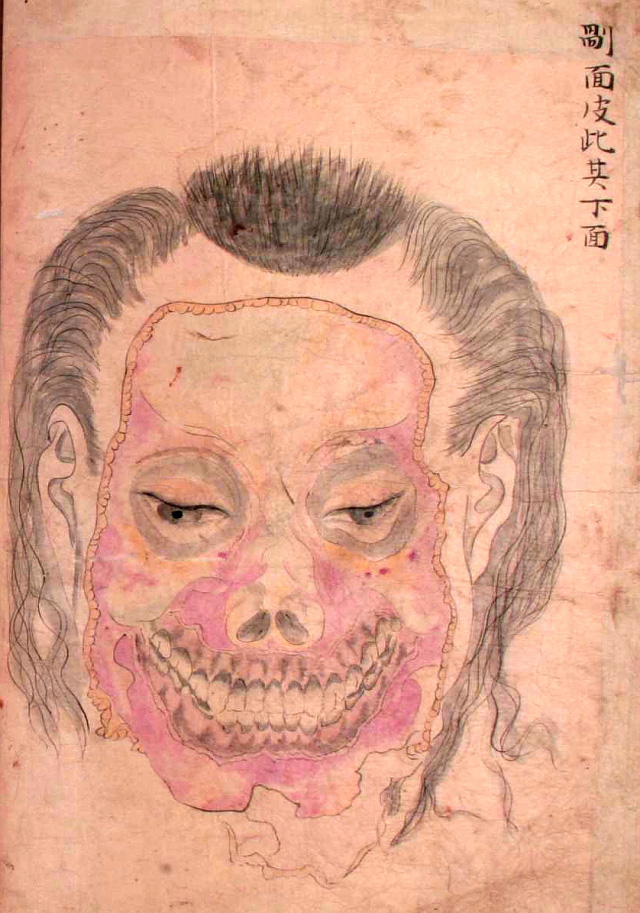
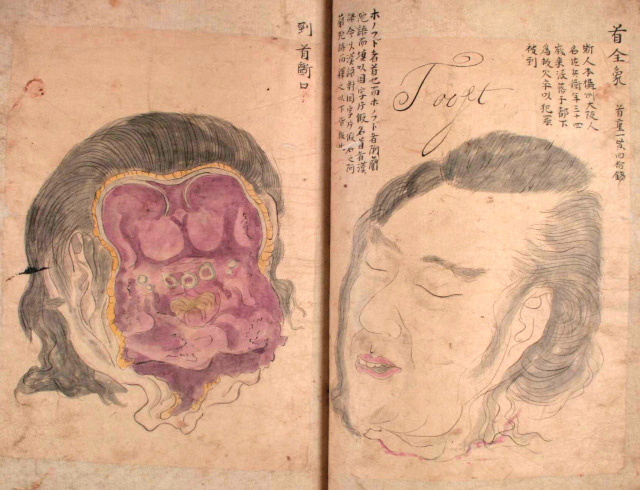
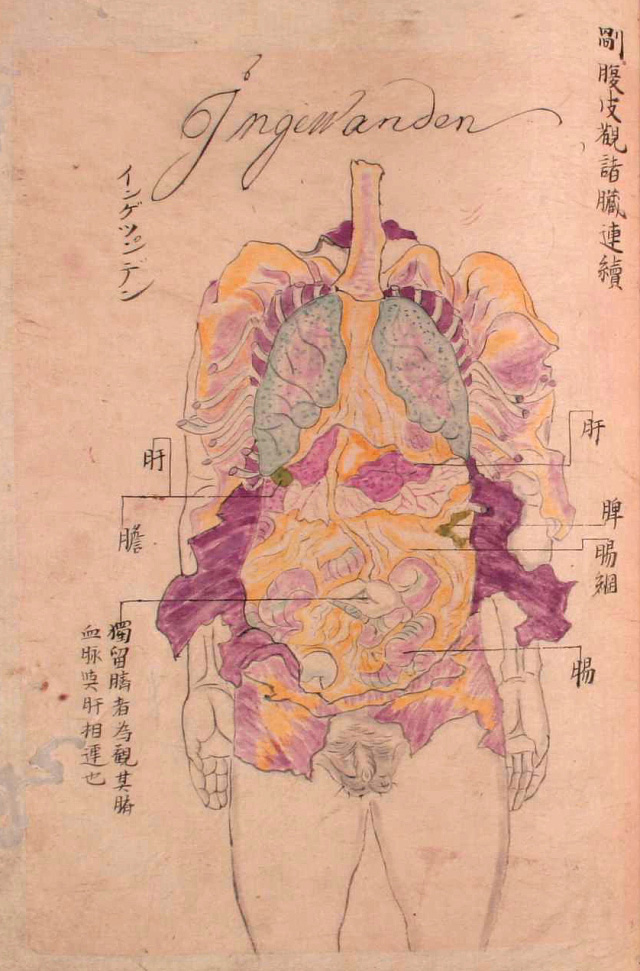
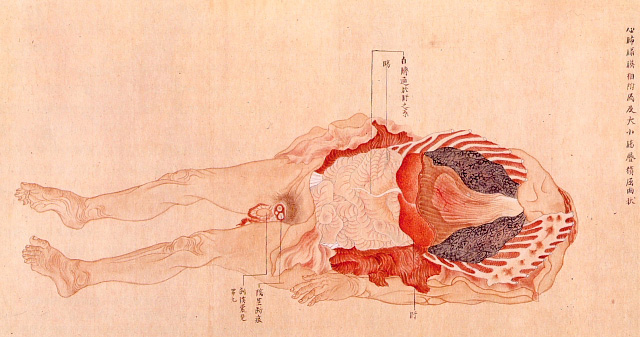
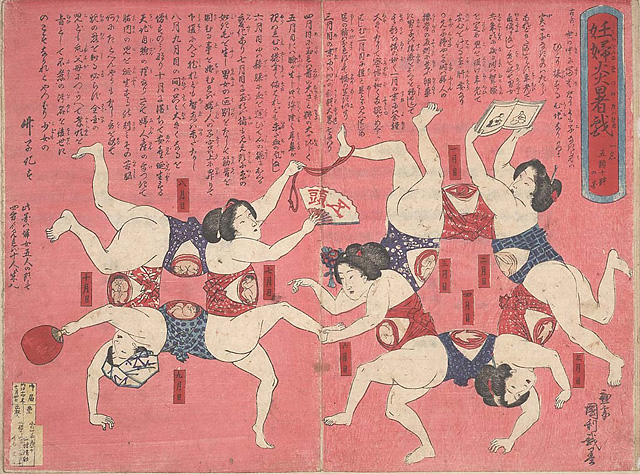
In the 18th and 19th centuries, sideshow carnivals known as misemono were a popular form of entertainment for the sophisticated residents of Edo (present-day Tokyo). The sideshows featured a myriad of educational and entertaining attractions designed to evoke a sense of wonder and satisfy a deep curiosity for the mysteries of life. One popular attraction was the pregnant doll.

Vintage wooden pregnant mannequin, Japan --
“Light-skinned” pregnant doll – Edo-Tokyo Museum [+]

Although it is commonly believed that these dolls were created primarily to teach midwives how to deliver babies, evidence suggests they were also used for entertainment purposes.

Edo-era obstetric doll, Japan --
“Dark-skinned” pregnant doll – Edo-Tokyo Museum [+]

For example, records from 1864 describe a popular show in Tokyo’s Asakusa entertainment district that educated audiences about the human body. The show featured a pregnant doll whose abdomen could be opened to reveal fetal models depicting the various stages of prenatal development.

Old wooden baby dolls, Japan --
Baby doll – Edo-Tokyo Museum [+]

Similarly, records of Japan’s first national industrial exhibition in 1877 indicate a Yamagata prefecture hospital doctor named Motoyoshi Hasegawa showed off an elaborate set of fetus models illustrating seven different stages of growth, from embryo to birth.

Japanese pregnancy manikin, Japan --
Fetus model set (circa 1877) – Toyota Collection [+]

Although it is unclear whether the fetus model set pictured here is the same one Hasegawa showed in 1877, records suggest his model was a hit at the exhibition.

[Source: Geijutsu Shincho magazine, July 2001]

Stylish surgical masks by Yoriko Yoshida

Illustrator Yoriko Yoshida has dreamed up dozens of colorful face mask designs that are sure to keep you looking cool and feeling safe as fears of swine flu spread across the globe.

Surgical mask design by Yoriko Yoshida --
The mask of Octopus beard

Surgical mask design by Yoriko Yoshida --
The mask of Rising sun

Surgical mask design by Yoriko Yoshida --
The mask of Skull

Surgical mask design by Yoriko Yoshida --
The mask of Wild boar

Surgical mask design by Yoriko Yoshida --
The mask of Mt. FUJI

Surgical mask design by Yoriko Yoshida --
The mask of Beauty

[Link: Yoriko Yoshida's surgical masks]

‘Magic mirror’ shows real-time muscle data

Magic mirror system by IRT --

Researchers at the University of Tokyo have developed a computerized, sensor-based “magic mirror” that analyzes muscular activity and shows real-time computer-generated images of how hard the user’s muscles are being worked while exercising.

The magic mirror, developed under the leadership of professor Yoshihiko Nakamura of the Information and Robot Technology Research Initiative (IRT), was unveiled at the University of Tokyo last Friday. In a demonstration for the media, the system’s display monitor showed a real-time computer-generated image of a male model’s musculo-skeletal system while he performed a series of physical exercises.

The system, which is currently capable of monitoring the activity of 30% of the body’s roughly 300 skeletal muscle pairs, consists of 16 electromyographs (instruments that record the electrical waves associated with muscle activity) attached to the user’s body, 10 motion-capture cameras, and a pair of floor sensors to measure the force exerted on the legs.

On the monitor, each muscle is shown in a different color depending on how much it is being used at a particular moment. Active muscles are shown in red, while inactive muscles are shown in yellow.

Magic mirror system by IRT --
(Muscle images can also be overlaid on the video image of the user’s body.)

The magic mirror system uses newly developed software that is reportedly 10 times faster than previous technology, allowing the system to operate in real-time, even when the user is moving rapidly.

The researchers, who are already working on a more compact version that incorporates the cameras directly into the display, envision the system being used in homes, gyms and hospitals. In addition to helping people get into shape, the system might also help doctors more effectively treat conditions that affect the muscles.

[Sources: Robot Watch, Yomiuri, Nikkei]